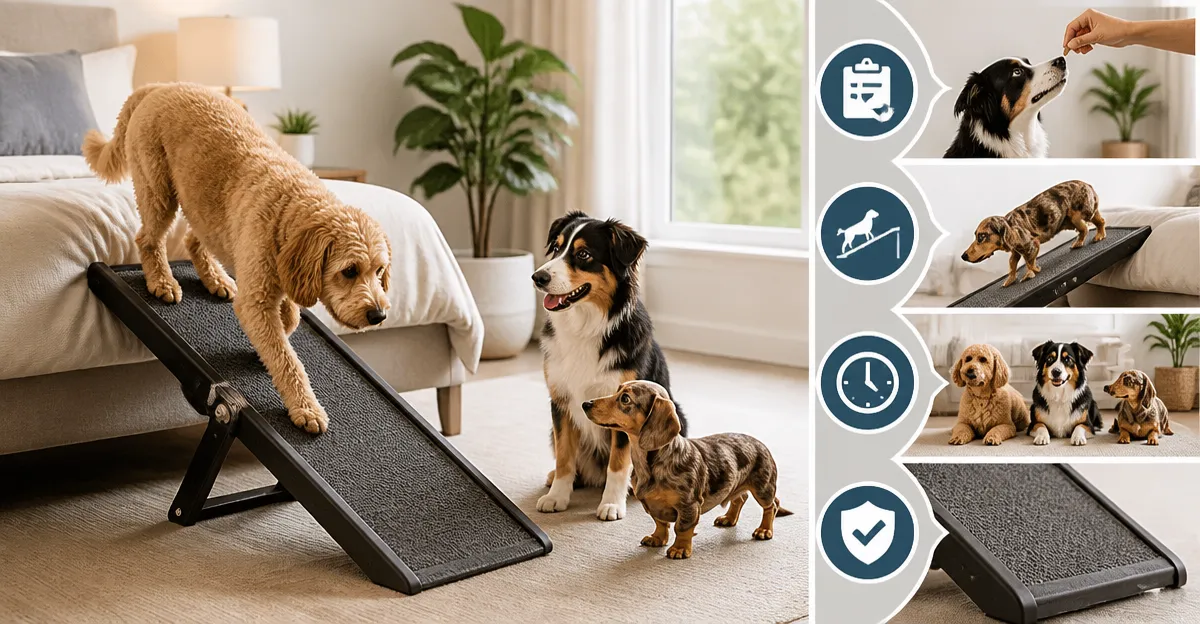
How to Manage Ramp Access in a Multi‑Dog Household: Step‑by‑Step Training, Safety & Scheduling Tips
Introduction
In a household with several canine companions, providing safe and efficient ramp access can prevent injuries, reduce owner strain, and improve overall harmony. This guide explains how to assess ramp needs, train each dog, establish a schedule, and maintain safety while recommending proven tools that simplify the process. By following the procedures, one will create a predictable routine that respects the physical limits of senior or injured dogs and accommodates the energy of younger pets.
The information presented is based on real‑world experiences and verified product specifications. Readers will learn how to select the appropriate ramp, introduce it gradually, and troubleshoot common challenges. The result is a calmer household where every dog can reach the car, sofa, or bed without fear.
What You’ll Need
- One or more portable dog ramps suitable for the weight and size of each dog.
- Treats and a clicker for positive reinforcement training.
- Non‑slip mats or silicone footprints for added traction on hardwood or tile floors.
- Cleaning supplies for maintaining ramp surfaces.
Below are four highly rated products that meet these requirements. The first mention of each product includes a direct affiliate link.
Step 1: Assess Individual Dog Requirements
Begin by measuring the height of the entry point—whether it is a car trunk, SUV tailgate, or a sofa seat. Compare this height with the ramp length to calculate the slope angle. A gentler slope (approximately 10–15 degrees) reduces joint stress, especially for senior or arthritic dogs. For larger breeds or dogs over 150 lb, select a ramp with a higher weight capacity and a wider deck to prevent side‑way slipping.
Recommended tool: Pawaboo Extra‑Wide Dog Car Ramp. This 74‑inch ramp supports up to 250 lb, offers a 20‑inch deck, and features a non‑slip mesh surface. Its extra width is ideal for dogs that require a broader footing, and the gentle slope protects joints during ascent and descent. Price: $99.95, Rating: 4.4/5 (2,228 reviews).
Record each dog’s weight, age, and any known mobility issues. This data will guide the selection of the most appropriate ramp model for each animal.
Step 2: Introduce the Ramp in a Low‑Stress Environment
Place the ramp on a flat surface away from distractions. Allow the dog to sniff and explore the ramp without pressure. Use treats to reward any interaction, such as touching the ramp with a paw or nose. If the dog shows hesitation, lower the ramp angle by adding a short wooden block at the base, creating a shallower incline.
For smaller dogs or puppies, the Aodisman 3‑Step Dog Stairs can serve as an introductory platform. The curved steps provide a gradual rise, encouraging confidence before transitioning to a full‑length ramp. Price: $29.99, Rating: 4.5/5 (5,111 reviews).
Maintain a calm voice and steady pace. Consistency in tone signals safety, while the clicker marks the exact moment of desired behavior, reinforcing learning.
Step 3: Practice Loading and Unloading with the Chosen Ramp
Once the dog is comfortable stepping onto the ramp, practice the complete journey to the target location. Begin with short trips, such as moving from the living room to the couch, then progress to the vehicle. Position the ramp securely against the car’s tailgate using the built‑in metal mounting buckles and adjustable strap found on the Pawaboo ramp. This prevents accidental sliding during use.
If the household includes a medium‑sized dog that requires a lighter, more portable solution, consider the PetSafe Folding Dog Ramp. Weighing only 10 lb, it folds in half for easy storage and supports dogs up to 150 lb. Its high‑traction treads and rubber feet ensure stability on uneven ground. Price: $59.99, Rating: 4.1/5 (15,002 reviews).
Encourage the dog to use the ramp independently by placing a favorite toy or treat at the top. Gradually reduce hand assistance, allowing the animal to navigate the ramp unaided. Observe the dog’s gait; any signs of slipping or hesitation indicate the need for additional traction or a gentler slope.
Step 4: Establish a Household Ramp Schedule
In multi‑dog homes, overlapping ramp usage can cause confusion and competition. Create a visual schedule that assigns specific time slots for each dog based on age, health, and daily routine. For example, senior dogs may use the ramp first in the morning to reduce joint stiffness, while younger dogs can be scheduled later for playtime outings.
Use a simple whiteboard or a digital calendar shared among family members. Mark the ramp’s location, the designated dog, and any required accessories such as a leash or harness. Consistency in scheduling prevents one dog from monopolizing the ramp and reduces the likelihood of accidents caused by rushed movements.
When multiple dogs need to use the same ramp, ensure the surface is clean and free of debris between uses. A quick wipe with a damp cloth restores traction and removes paw prints that could become slippery.
Step 5: Maintain Safety and Longevity of the Ramp
Regular inspection of the ramp’s structural components is essential. Check the high‑traction treads, side rails, and rubber feet for wear. The PetSafe ramp offers replaceable high‑traction treads, extending its service life. Tighten any loose bolts on the Pawaboo model’s cross‑load bearing beams to maintain stability under heavy loads.
Store the ramp in a dry environment when not in use. Folding ramps should be collapsed fully and locked with the safety latch to prevent accidental opening. The PetThem Extra‑Long Dog Car Ramp folds into a compact package of 17.2" × 5" × 19" and includes a handle for easy transport. Its aluminum alloy construction resists corrosion, making it suitable for outdoor adventures. Price: $94.99, Rating: 4.4/5 (1,303 reviews).
Finally, keep a set of non‑slip silicone footprints or EVA pads underneath the ramp when it rests on polished floors. This prevents scratches on the floor and adds an extra layer of grip for the dog’s paws.
Tips & Pro Tips
- Begin training sessions in a quiet room to limit distractions.
- Use high‑value treats such as soft cheese or chicken pieces to motivate reluctant dogs.
- Gradually increase the ramp’s incline as confidence builds; never force a steep angle.
- For dogs with arthritis, apply a warm compress to the joints before ramp use to improve flexibility.
- Consider adding a reflective strip to the ramp’s side for visibility during low‑light conditions.
Troubleshooting
| Problem | Possible Cause | Solution |
|---|---|---|
| Dog refuses to step onto ramp | Ramp angle too steep or surface feels slippery | Reduce angle with a block, add a non‑slip mat, and reward small steps. |
| Ramp wobbles during use | Uneven floor or loose safety latch | Place rubber feet on uneven surfaces and verify latch is fully engaged. |
| Paws develop abrasions | Sand‑paper style treads are too harsh | Replace with softer high‑traction treads (available for PetSafe ramp) or cover with a thin carpet fabric. |
Conclusion
Managing ramp access in a multi‑dog household requires careful assessment, consistent training, and a well‑structured schedule. By selecting the appropriate ramp—whether the wide‑deck Pawaboo model for large dogs or the lightweight PetSafe ramp for medium breeds—one can safeguard joint health, reduce owner fatigue, and promote harmonious coexistence among pets. Regular maintenance and clear communication among household members complete the system, ensuring that every dog can enjoy safe and independent mobility.
Products Mentioned in This Guide
Frequently Asked Questions
How do I choose the right ramp for dogs of different sizes and weights?
Pick a ramp with a weight capacity exceeding your heaviest dog, a length that provides a gentle incline, and a non‑slip surface that matches each dog's foot size.
What’s the best way to introduce a new ramp to a multi‑dog household?
Allow each dog to sniff the ramp, then use treats and a clicker to reward short, confident steps, gradually increasing time on the ramp.
How can I train multiple dogs to use the ramp without competition?
Train one dog at a time, using a clear cue and positive reinforcement, then rotate the cue so each dog learns the routine without feeling rushed.
What scheduling tips help prevent ramp conflicts among dogs?
Create a simple timetable or visual cue (e.g., a chalkboard) indicating which dog uses the ramp first, especially for senior or injured dogs that need extra time.
How do I keep the ramp safe and maintain it over time?
Regularly inspect the ramp for wear, clean the non‑slip surface with mild soap, and replace silicone footprints or mats if they become slippery.