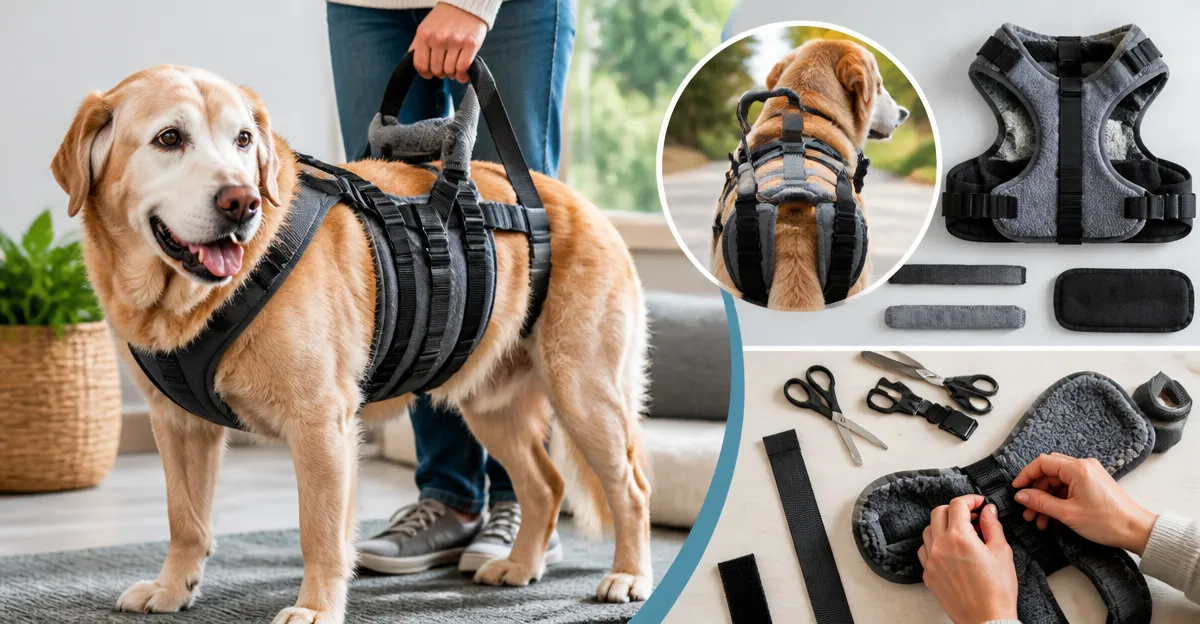
Introduction
As dogs age, joint pain, reduced muscle strength, and mobility challenges become common. Owners often seek ways to extend their pets' active years while maintaining safety. This guide explains how to evaluate, select, and modify harnesses to improve comfort, support, and freedom of movement for senior canines. Readers will learn foundational anatomy, product categories, step‑by‑step modification techniques, and best‑practice maintenance tips.
The information presented combines scientific insight with real‑world product examples. By the end of the article, owners will be able to customize a harness that fits their dog's unique needs, reduces strain, and encourages confident movement.
Background / Context
Canine musculoskeletal health relies on balanced load distribution across the spine, hips, and limbs. Age‑related conditions such as arthritis, hip dysplasia, and ligament degeneration alter gait patterns and increase the risk of falls. A well‑designed harness can redistribute weight, limit excessive pulling, and provide lift assistance during stair navigation or vehicle entry.
Key terms include:
- Load‑bearing capacity: the maximum weight a harness can safely support, typically measured in pounds.
- Adjustable strap system: a series of buckles or Velcro closures that allow precise fitting.
- Support sling: an auxiliary strap that lifts the hindquarters or front end to reduce joint stress.
Understanding these concepts helps owners match a product to the dog’s size, condition, and daily activities. The following sections break down the process into logical steps.
Assessing Mobility Needs
The first step is a thorough assessment of the dog’s current abilities. Observe the pet while climbing stairs, entering a vehicle, and walking on different surfaces. Note any hesitation, limping, or inability to rise without assistance. Record the dog’s weight, height at the shoulder, and any existing medical recommendations.
Veterinarians often provide a weight‑bearing limit for post‑surgical patients. For example, a dog recovering from ACL surgery may be advised not to exceed 20 % of its body weight on the affected limb. This figure guides the selection of a harness with appropriate load‑bearing capacity.
When the assessment reveals a need for additional lift or stabilization, consider integrating a support sling or a lift‑assist harness. The following product categories address these scenarios.
Choosing the Right Harness Type
Three primary harness categories serve senior dogs:
- Standard full‑body safety harnesses that provide even weight distribution.
- No‑pull training harnesses that discourage forward pulling and reduce joint strain.
Each category offers distinct advantages. A standard safety harness such as the AFP Fall‑Arrest Harness delivers a capacity of 310 lb, high‑visibility stitching, and an 8‑inch supportive back belt. Its heavy‑duty polyester webbing and ISO‑tested construction meet ANSI and OSHA standards, ensuring durability for outdoor work and everyday walks.
For owners seeking to curb pulling while adding reflective safety, the PHOEPET No Pull Dog Harness offers a front‑clip option, a rear handle, and reflective material that enhances visibility in low‑light conditions. The harness is rated 4.5 / 5.0 by over 29,000 reviewers and is priced at $15.83.
Dogs with significant hind‑leg weakness benefit from a dedicated sling such as the LOOBANI Dog Sling. It provides hip support, a soft sheepskin‑like lining, and adjustable straps capable of supporting large breeds up to 180 lb when combined with the larger size options. The sling is rated 4.5 / 5.0 and costs $19.99.
When a comprehensive lift solution is required, the OneTigris Dog Lift Harness delivers a 360° support design, multiple grab handles, and stainless‑steel hardware. It accommodates dogs from 18 lb to 180 lb across five size tiers, and its modular construction allows conversion into a shoulder sling or a simple leash.
Finally, the PICK FOR LIFE Dog Sling combines a rear‑leg support harness with soft plush padding and a durable oxford fabric exterior. Priced at $18.99, it is suitable for medium‑to‑large dogs recovering from knee or hip surgery.
Step‑by‑Step Modification Process
Below is a systematic approach to customizing a harness for an aging dog. The steps assume the owner has selected a base harness from the product list and wishes to add lift assistance, extra padding, or reflective elements.
1. Measure and Record Dimensions
Using a flexible measuring tape, record the dog’s neck girth, chest girth, and back length. These measurements determine the appropriate size for each product. For example, a dog with a chest girth of 30 inches fits the Large size of the OneTigris Dog Lift Harness (chest 27‑36 in).
2. Install Adjustable Padding
Purchase breathable mesh padding or foam inserts that can be sewn or Velcro‑attached to the harness’s shoulder and back straps. The AFP Fall‑Arrest Harness already includes plush padded shoulder pads; owners can add an extra layer of moisture‑wicking material for dogs that sweat during outdoor activities.
3. Attach a Support Sling
Loop the LOOBANI Dog Sling’s reflective nylon band through the D‑rings on the AFP or PHOEPET harness. Secure the sling’s handle under the dog’s abdomen, ensuring the strap runs parallel to the spine. Adjust the length so the sling lifts the hindquarters by approximately 2‑3 inches, enough to alleviate pressure on the hips without causing an unnatural gait.
4. Add Reflective Elements
For low‑light safety, sew high‑visibility lime stitching or reflective tape onto the harness’s webbing. The PHOEPET No Pull Dog Harness already incorporates reflective material; additional strips can be applied to the OneTigris harness’s metal D‑rings for enhanced visibility.
5. Test Fit and Mobility
Place the modified harness on the dog and observe its movement on a smooth surface. Ensure that all buckles are snug but not restrictive, and that the sling does not impede natural stride. Perform a short walk and a stair climb, watching for signs of discomfort such as excessive panting or reluctance to move.
6. Fine‑Tune Adjustments
Based on the test, tighten or loosen straps in 0.5‑inch increments. Verify that the load‑bearing points (D‑rings, shoulder pads, back belt) share weight evenly. Re‑check the harness after 24 hours of wear, as fabric may settle and require minor readjustments.
Comparison / Selection Guide
| Product | Key Strengths | Ideal Use Case | Price | Rating |
|---|---|---|---|---|
| AFP Fall‑Arrest Harness | 310 lb capacity, 8‑inch back support belt, ANSI/OSHA compliance, high‑visibility stitching | Large, active seniors needing full‑body support and outdoor durability | $99.99 | 4.6/5 (727 reviews) |
| PHOEPET No Pull Dog Harness | Front and rear leash clips, reflective material, built‑in back handle, lockable buckles | Training‑focused owners who want to reduce pulling and increase night‑time visibility | $15.83 | 4.5/5 (29,861 reviews) |
| LOOBANI Dog Sling | Hip support, soft sheepskin lining, reflective nylon, machine‑washable | Senior dogs with weak hind legs, post‑surgery recovery, or arthritis | $19.99 | 4.5/5 (13,755 reviews) |
| OneTigris Dog Lift Harness | 360° support, multiple grab handles, stainless‑steel hardware, configurable straps | Dogs requiring full‑body lift assistance, large breeds, or custom strap configurations | $69.99 | 4.5/5 (916 reviews) |
| PICK FOR LIFE Dog Sling | Rear‑leg support, plush interior, durable oxford exterior, washable | Medium to large dogs recovering from knee or hip surgery, owners seeking an affordable sling | $18.99 | 4.4/5 (5,996 reviews) |
When selecting a product, prioritize load capacity, adjustability, and the presence of auxiliary features such as reflective material or built‑in handles. The table above provides a quick reference to match a dog’s condition with the most appropriate harness.
Best Practices & Tips
- Inspect webbing and stitching before each use. Look for fraying, discoloration, or broken buckles.
- Rotate harnesses if possible to allow fabric to breathe and reduce wear on a single set of straps.
- Use a breathable, moisture‑wicking liner under the harness for dogs that sweat heavily during walks.
- Store the harness in a cool, dry place away from direct sunlight to preserve webbing tensile strength.
- Combine a full‑body harness with a separate sling only when the dog’s hind‑leg weakness exceeds the harness’s built‑in support.
- Schedule regular veterinary check‑ups to reassess the dog’s mobility needs and adjust harness configurations accordingly.
Frequently Asked Questions
1. How do I know if my dog needs a lift‑assist harness?
If the dog struggles to rise from a seated position, hesitates on stairs, or cannot walk without support, a lift‑assist harness such as the OneTigris Dog Lift Harness or a supplemental sling is advisable.
2. Can I use a human fall‑arrest harness on a dog?
Human fall‑arrest harnesses like the AFP Fall‑Arrest Harness are engineered for high load capacities and feature padded shoulder straps that can be adapted for canine use. However, ensure that the strap placement aligns with the dog’s anatomy and that all buckles are secured to prevent escape.
3. What is the ideal strap tension for a senior dog?
Straps should be tight enough to prevent shifting but loose enough to allow a finger to slide comfortably between the strap and the dog’s skin. Over‑tightening can restrict circulation and cause skin irritation.
4. How often should I replace a harness?
Replace the harness when webbing shows signs of wear, buckles become brittle, or the manufacturer’s warranty period expires. For heavily used harnesses, a replacement every 12‑18 months is a prudent guideline.
5. Are reflective harnesses effective in preventing accidents?
Reflective materials increase visibility to drivers and pedestrians in low‑light conditions. While they do not guarantee safety, they significantly reduce the likelihood of accidents, especially when combined with high‑visibility clothing for the owner.
6. Can I wash a harness with a sling attached?
Most slings, such as the LOOBANI Dog Sling, are machine‑washable, but the harness component should be hand‑washed to preserve hardware and stitching. Remove Velcro closures before washing to prevent snagging.
7. Is it safe to use a harness on a dog with an open wound?
Do not place a harness directly over an open wound. Use a soft, breathable bandage to cover the area before applying the harness, and consult a veterinarian for wound‑care guidance.
Conclusion
Customizing a harness for an aging dog blends veterinary insight, engineering principles, and practical product knowledge. By assessing mobility needs, selecting the appropriate base harness, and applying targeted modifications such as padding, slings, and reflective upgrades, owners can dramatically improve their pet’s comfort and independence. Regular inspection, proper fit, and adherence to best‑practice maintenance ensure that the harness remains a reliable aid throughout the dog’s senior years.
Investing time in a well‑designed, modified harness not only safeguards the dog’s physical health but also strengthens the bond between pet and owner, allowing cherished moments of activity and affection well into the twilight of the dog’s life.
Products Featured in This Guide
AFP Fall‑Arrest Harness
Price: $99.99 | Rating: 4.6/5 (727 reviews)
Featured because it offers a high load capacity, padded back support belt, and ANSI/OSHA compliance, making it ideal for large senior dogs that need full‑body stability.
PHOEPET No Pull Dog Harness
Price: $15.83 | Rating: 4.5/5 (29,861 reviews)
Featured for its front‑clip anti‑pull design, reflective material, and convenient back handle, which together reduce joint strain during walks.
LOOBANI Dog Sling
Price: $19.99 | Rating: 4.5/5 (13,755 reviews)
Featured because it provides targeted hip support, a soft sheepskin lining, and adjustable straps suitable for dogs recovering from surgery or suffering from arthritis.
OneTigris Dog Lift Harness
Price: $69.99 | Rating: 4.5/5 (916 reviews)
Featured for its 360° support design, multiple grab handles, and stainless‑steel hardware, which together enable comprehensive lift assistance for large senior dogs.
PICK FOR LIFE Dog Sling
Price: $18.99 | Rating: 4.4/5 (5,996 reviews)
Featured because it offers an affordable rear‑leg support solution with plush interior padding, making it suitable for medium‑to‑large dogs in postoperative recovery.